Homework: POST ON YOUR BLOGS The following links to a synopsis of Shakespeare's Othello. Please read Carefully and do the following: Sort by Acts and Scenes:
Characters:
Roderigo: a gentleman who has been courting Desdemona and who is upset that she eloped with Othello.
Iago: a soldier under Othello’s command. He hates the Moor because of Michael Cassio.
Desdemona: the daughter of Brabantio, Roderigo has been courting her and eloped with Othello.
Othello: a great Moorish warrior who is now the general in the service of the ruler of Venice.
Michael Cassio: a soldier but was promoted to lieutenant instead of Iago. He is an old and beloved friend of Othello.
Brabantio: the father of Desdemona.
Duke: The official authority.
Montono: the Venetian governor.
Emilia: Iago’s wife who came to Cyprus to look after Desdemona.
Clown: a servant to Othello.
Bianca: Cassio’s lover.
Lodovico: Desdemona’s kinsman.
Act I, Scene I
Setting: The play opens a warm Venetian night where Roderigo and Iago were having a conversation. Then it moves to Brabantio’s property (His window, below his window, Desdemona’s room and the street).
Exposition: (Act I, Scene I) The play opens a warm Venetian night. There is a conversation underway between Roderigo and Iago. Iago reveals that he only remains on Othello’s service to facilitate his plans on revenge.
Act I, Scene II
Setting: The scene opens on a Venetian street where Iago has joined Othello and his attendants. Then Brabantio, Roderigo enters and Brabantio lashes out at Othello.
Act I, Scene III
Setting: The Council Chamber where the Duke and his senators gather.
Act II, Scene I
Setting: In Cyprus in a seaport where Montono, and his friends discuss a tempest that might destroy the Turkish Fleet. Iago, Desdemona, Roderido, and Iago’s wife landed on the ship.
Act II, Scene II
Setting: On a street in Cyprus a messenger announced the great victory feast and party that Othello planned.
Act II, Scene III
Setting: The great hall of the castle where Othello, Desdemona and Cassio speak briefly about lago. Iago and Cassio partake in a glass of wine. Roderigo and Cassio get into sword fight. Cassio gets dismissed for duty. Iago tells Cassio to talk to Desdoemona to restore friendship.
Act III, Scene I
Setting: Outside the castle where Cassio gathers some musicians in hopes of putting Othello in a good mood. Outside Desdemona’s chamber where Cassio asked Emilia to grant him access to visit Desdemona.
Act III, Scene II
Setting: Othello plans to inspect some parts of the fortifications that were build by his troops.
Rising Action: (Act I, Scene I - Act III, Scene II) Iago reveals his plans on revenge on Othello. He plans Cassio to lose his position as lieutenant and to breakup Othello and Desdemona. By making it seem like Desdemona is unfaithful.
Act III, Scene III
Setting: The garden of the castle where Cassio asks Desdemona to speak to Othello and convince him that he is still trustworthy solider and friend.
Climax: (Act III, Scene III) Iago’s plan comes to effect. Othello returns to the castle and Iago states the Cassio just parted from his wife. Iago starts to fill Othello with lies that Cassio’s ulterior motive has long been to have an affair with Desdemona. He heard Desdemona profess her love to Cassio and he has seen Cassio with Desdemona’s handkerchief. Iago also fills his head with insecurities like reminding Othello that Cassio is younger, more handsome and that he is a white Venetian citizen. Othello chooses the words of Iago over his trust in his wife. Othello kneels before Iago and takes a vow of revenge.
Act III, Scene IV
Setting: In front of the castle where Desdemona and Emilia meet the Clown.
Act IV, Scene I
Setting: On the grounds of the castle where Iago and Othello continue their discussion of Desdemona’s adultery.
Act IV, Scene II
Setting: A room of the castle where Othello questions Emilia about her knowledge of Desdemona’s affair.
Act IV, Scene III
Setting: In another room where Othello is with Desdemona, Emillia and Lodovico.
Act V, Scene I
Setting: Out on the street where Iago positions Roderigo to ambush Cassio.
Act V, Scene II
Setting: Desdemona’s Bedchamber in the castle.
Falling Action: (Act V, Scene II) Othello realizes that Iago has mad false statements and has made him kill his wife.
Resolution: (Act V, Scene II) Othello stabs Iago only to wound him. Othello stabs himself and dies next to Desdemona.
Conflicts: Many of the conflicts were Man vs. Man
Iago vs. Othello
Iago vs. Cassio
Brabantio vs. Othello
Friday, September 26, 2008

Thursday, September 25, 2008
Sept. 25 - Sept. 26
Please research pictures of any African American Actor who you think can play the role of Othello in YOUR MOVIE!


Desdemona

Keira Knightley http://img2.timeinc.net/people/i/2006/celebdatabase/keiraknightley/keira_knightley1_300_400.jpg
Iago

Johnny Depp
Wednesday, September 24, 2008
Sept. 24
Objective:Students will use various search engines to conduct historical background on the Moors. In doing so, students will better understand the cultural as well as the social context of Shakespeare’s Othello.
Aim: What is the cultural as well as the social context of Shakespeare’s othello?
Please post on your Blog Page.
Do Now: In yesterday’s lesson, we created a scene. If you had to select an actor to play one of the characters (protagonist/antagonist) who would you choose and why?
Who were the Moors?
- Moors are Muslim who are of Berber and Arabs descent
http://www.answers.com/Moors
Who were the Venetians?
-They were wealthy and powerful people, during the late 1500's and early 1600's
http://shs.westport.k12.ct.us/jwb/Collab/Othello/othrsrchrslt.htm
What was the military duty of ranked officers?
-The general and the lieutenant.
http://shs.westport.k12.ct.us/jwb/Collab/Othello/othrsrchrslt.htm
What was the military hierarchy?
- The aristocratic class is the wealthiest and most powerful individuals. The cavalry members were quite wealthy. They supplied chariots, horses and were commanders of small units.
The hoplite soldiers were third class members. The lowest class was the generals and commanders.
http://www-adm.pdx.edu/user/sinq/greekciv2/sport/army/seanh3.htm
What was the role of women?
-Women were mostly silent. They don't speak much about their opinions, especially in public. Noble women had easier lives. While poor women had to work hard to keep their husbands and families happy.
http://shs.westport.k12.ct.us/jwb/Collab/Othello/othrsrchrslt.htm
What was expected of a daughter?
-Daughters were seen as property that was controlled by their fathers. They were expected to obey father's wishes and to marry at 13. They were expected to protect their virginity until marriage.
http://shs.westport.k12.ct.us/jwb/Collab/Othello/othrsrchrslt.htm
What was expected of a bride?
-The woman are expected to give birth to 2 boys and be loyal to her husband.
http://shs.westport.k12.ct.us/jwb/Collab/Othello/othrsrchrslt.htm
What relationships between men and women were considered beyond reproach?
-
What rules for getting married existed at the time of the play?
-The brides's family must agree on how much money is being offered. They must be from equal social class. There must be publicly declare the wedding and there must be a witnesses. The couple must consummate the marriage.
http://shs.westport.k12.ct.us/jwb/Collab/Othello/othrsrchrslt.htm
Who was the most famous Moor?
-Othello
http://www.answers.com/
What were the rules of courtship?
-Courtships were held by two major forms. One was parents and friend were the matchmakers.
Two was handled for the part by the parties involved. An example will be that a man attracted to a woman would ask her family for permission.
http://shs.westport.k12.ct.us/jwb/Collab/Othello/othrsrchrslt.htm
When conducting your research please use .org or .edu websites. Don’t forget to cite your sources.
Homework:
Post the following on your Blogs:
What rules dictate the behavior of men and women in relationships today?
-The rules in relationships will be to be loyal to each other, respect each and to care for each other.
Name a situation in which the rules have been clearly violated?
-When the people in the relationship feels when the relationship is going the other way.
That is, what are things “nice girls” or “nice boys” just don’t do?
-They don't break the rules.
Why do these rules exist?
-Rules exist to control the people so they would be out of control.
Do you think they apply locally or even just at your school?
-I think they apply locally and even in school.
What are the possible consequences of breaking these rules?
Do you know if these rules are applicable to other cultures or are they totally different?
-I think it can apply to other cultures.
Think of scenes from ANY show/movie that adheres to these rules as well as shows/movies that violates these rules.
-Like in Lipstick Jungle when a girl goes to a club with a fake ID. She was suppost to be at a friends house.
Sept. 23
Aim: What are some of the major elements of drama?
Do Now: What comes to mind when you hear the word drama?
-Plays, children, ch.11
-Actors
-Performers
-Mimics Life
-Dialogues
-Comedy and Tragedy
-Conflicts
-Relationships
-Crimes and Love
Let’s Brainstorm.
What is a play?
-A type of literature that is mainly written by a playwright.
What is involved in a play?
-Actors, conflict, setting, script, and costumes.
Where was Shakespeare’s plays staged?
-The Globe Theater
Who did he write his plays for?
-For the Queen
Who was his audience?
-All the people
Who were the actors/resses?
-The men
How were the characters dressed?
-The characters they played
How did they speak?
-English
Can we plot a play? Exposition, Rising Action, Climax, Falling Action, Resolution.
-yes
What do you think was the cultural background of the actors/resses? Any people of color?
-No, they were white.
How many of Shakespeare’s plays have you read or know about?
-Romero and Juliet
Have you ever seen an On/Off Broadway play?
-yes
Do you like plays? Why or Why not?
-I like plays because the customs they have, the way they amuse you, the singing and over all they entertain you.
Cooperative Learning:
Okay from what you already know, and learned now tell me if you had to put on a play what kind of play would it be, and what would be involved in putting on your play?
Here is a topic: that you can work on “if you see something say something” Now if this was the name of your play what monologue/dialogue would you expect or write for this play?
“If you see something say something”
Marya: "Hey guys take a look at the creepy man in the train."
Stephanie: "Oh my gosh, that's a huge coat he's wearing on a hot summer day."
Juanita: "Ha Ha Ha Ha"
Nahida: "Hey guys why is he looking at us.''
Stephanie: " Maybe we should go before something happens."
Marya: " Yea maybe we should."
Juanita: " I think he's following us, maybe we should run."
Nahida: "No because then we are going to look like crazy people. Let's juts tell someone because we saw something."
Tuesday, September 23, 2008
Elements of drama
Catharsis- The purging of the feelings of pity and fear that, according to Aristotle, occur in the audience of tragic drama. The audience experiences catharsis at the end of the play, following the catastrophe.
Character- An imaginary person that inhabits a literary work. Literary characters may be major or minor, static (unchanging) or dynamic (capable of change).
Climax- The turning point of the action in the plot of a play or story. The climax represents the point of greatest tension in the work.
Conflict- A struggle between opposing forces in a story or play, usually resolved by the end of the work. The conflict may occur within a character as well as between characters.
Denouement- The resolution of the plot of a literary work.
Dialogue- The conversation of characters in a literary work. In fiction, dialogue is typically enclosed within quotation marks. In plays, characters' speech is preceded by their names.
Diction- The selection of words in a literary work. A work's diction forms one of its centrally important literary elements, as writers use words to convey action, reveal character, imply attitudes, identify themes, and suggest values.
Dramatic monologue- A type of poem in which a speaker addresses a silent listener. As readers, we overhear the speaker in a dramatic monologue.
Dramatis personae- Latin for the characters or persons in a play.
Exposition- The first stage of a fictional or dramatic plot, in which necessary background information is provided.
Falling action- In the plot of a story or play, the action following the climax of the work that moves it towards its denouement or resolution.
Monologue- A speech by a single character without another character's response.
Narrator- The voice and implied speaker of a fictional work, to be distinguished from the actual living author.
Parody- A humorous, mocking imitation of a literary work, sometimes sarcastic, but often playful and even respectful in its playful imitation.
Pathos- A quality of a play's action that stimulates the audience to feel pity for a character. Pathos is always an aspect of tragedy, and may be present in comedy as well.
Plot- The unified structure of incidents in a literary work.
Point of View- The angle of vision from which a story is narrated. A work's point of view can be: first person, in which the narrator is a character or an observer, respectively; objective, in which the narrator knows or appears to know no more than the reader; omniscient, in which the narrator knows everything about the characters; and limited omniscient, which allows the narrator to know some things about the characters but not everything.
Rising Action- A set of conflicts and crises that constitute the part of a play's or story's plot leading up to the climax.
Soliloquy- A speech in a play that is meant to be heard by the audience but not by other characters on the stage. If there are no other characters present, the soliloquy represents the character thinking aloud.
Stage Direction- A playwright's descriptive or interpretive comments that provide readers (and actors) with information about the dialogue, setting, and action of a play. Modern playwrights, including Ibsen, Shaw, Miller, and Williams tend to include substantial stage directions, while earlier playwrights typically used them more sparsely, implicitly, or not at all.
Media Res- The narrative starts in the middle of the story instead of from its beginning. The characters, setting, and conflict are often introduced through a series of flashbacks or through characters relating past events to each other.
Tragic Flaw- A weakness or limitation of character, resulting in the fall of the tragic hero
Friday, September 19, 2008
Sept.17
We have read the following poems Shakespearean sonnets:
Sonnet XVIII, Sonnet 29, 116, and 130 (audio)
Do Now: Recall Shakespeare’s poems above and write a brief commentary on the portrayal of women in the Renaissance. You can look at the images and think about whether they seem idealized or realistic.
-I think that it is idealized because they are wearing to much makeup and there to dress up.The wealth people will be able to dress that way and not everyone will be able to dear that way.
How does the portrayal of women in the paintings of the period compare with the portrayal of women today such as Tyra Banks, Lindsay Lohan, Queen Latifah, Jesse Randhawa, Marilyn Monroe, Jane Seymour?
-The woman in the paintings are more conservative then the women of today. The women today wear less clothing. The Renaissance women are dressed up more with more clothing and doesn't show legs.
Sonnet XVIII, Sonnet 29, 116, and 130 (audio)
Do Now: Recall Shakespeare’s poems above and write a brief commentary on the portrayal of women in the Renaissance. You can look at the images and think about whether they seem idealized or realistic.
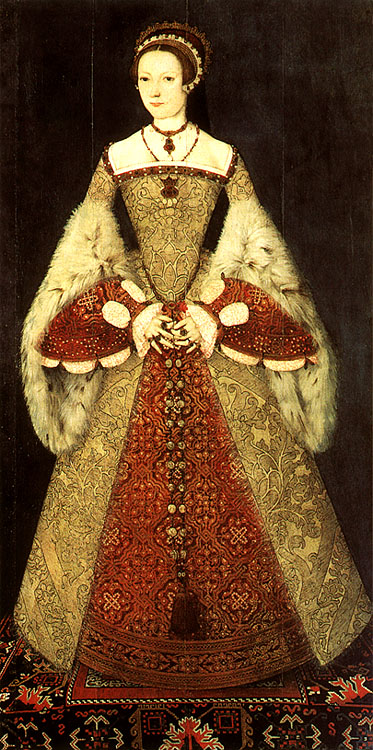
-I think that it is idealized because they are wearing to much makeup and there to dress up.The wealth people will be able to dress that way and not everyone will be able to dear that way.
How does the portrayal of women in the paintings of the period compare with the portrayal of women today such as Tyra Banks, Lindsay Lohan, Queen Latifah, Jesse Randhawa, Marilyn Monroe, Jane Seymour?


-The woman in the paintings are more conservative then the women of today. The women today wear less clothing. The Renaissance women are dressed up more with more clothing and doesn't show legs.
Sept.16
Aim: How is the Shakespearean Sonnet different from the Petrarchan Sonnet
Do Now: How would you describe your approach to romance when compared to your friends?
My approach to romance is much different compared to my friends. My friends are more out there and they want to be in a relationship and I am not thinking about that.
Teacher Read Aloud: Elizabeth Barrett Browning’s Sonnet 43
XLIII. "How do I love thee? Let me count the ways..."
by Elizabeth Barrett Browning (1806-1861)
How do I love thee? Let me count the ways.
I love thee to the depth and breadth and height
My soul can reach, when feeling out of sight
For the ends of Being and ideal Grace.
I love thee to the level of everyday's
Most quiet need, by sun and candle-light.
I love thee freely, as men strive for Right;
I love thee purely, as they turn from Praise.
I love thee with a passion put to use
In my old griefs, and with my childhood's faith.
I love thee with a love I seemed to lose
With my lost saints, --- I love thee with the breath,
Smiles, tears, of all my life! --- and, if God choose,
I shall but love thee better after death.
Comprehension Check:
What question does the speaker of “Sonnet 43” prose and answer?
-How the speakers loves it's beloved.
What is your impression of the romantic relationship described in this sonnet?
-The speaker loves the person so much.
Do you think it is desirable to love or be loved in this way?
-I think it is desirable to be loved in this way.
Literary Analysis:
What symbols are evident in this poem?
-The speaker loves the person.
Critical thinking:
Do you think it is wrong to love some so intensely?
- I think it is not wrong to love someone so intensely but at somepoint it will get a litle freaky.
Share out!
Subscribe to:
Posts (Atom)